
What exactly are the roles of manufacturers, importers and other economic operators?
The ESPR assigns tasks and obligations relating to the Digital Product Passport to manufacturers, importers, distributors and authorised representatives. Other actors provide data, technical services or information from the use and end-of-life phases.
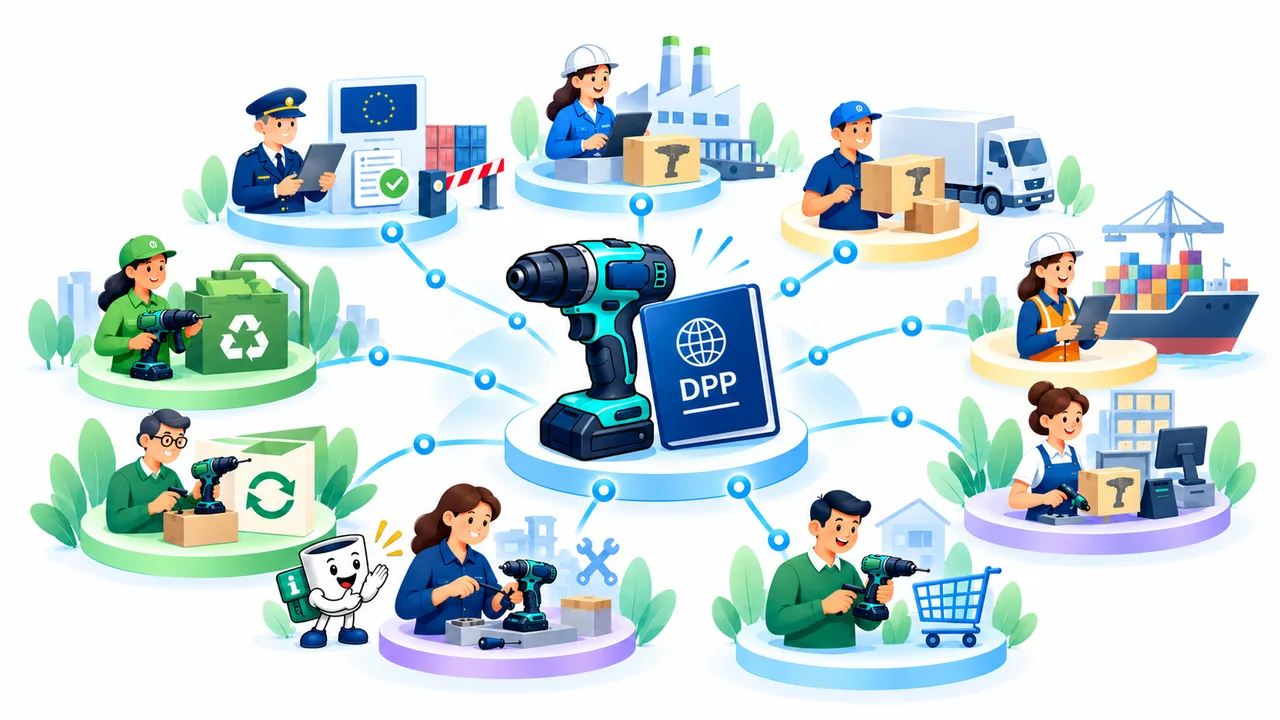
The ESPR (Ecodesign for Sustainable Products Regulation) identifies various economic operators that assume different tasks and obligations relating to the Digital Product Passport (DPP). These actors include, in particular, manufacturers, importers, distributors and authorised representatives. Fulfilment service providers within the meaning of the ESPR do not have a central role in connection with the DPP. Other actors in the DPP ecosystem include suppliers, DPP service providers, and companies operating in the areas of repair, reuse, upcycling and recycling.
Roles at a glance
Manufacturers
Manufacturers are natural or legal persons who manufacture or have a product designed or manufactured and market it under their name or trademark. They generally bear the greatest responsibility for providing product-related information and must ensure that the requirements applicable to their products are met. This also includes providing the information required for the DPP.
Importers
Importers place products from third countries on the European market. They must ensure that the products they import comply with the applicable requirements. This also includes checking whether the required product information and — where prescribed — a DPP are available.
Distributors
Distributors make products available on the market without being the manufacturer or importer. Before making a product available, they must check whether the prescribed information is available and the applicable requirements are met. Where a DPP is prescribed for a product group, distributors must check in particular whether it is available.
Authorised representatives
An authorised representative is a natural or legal person established in the European Union who has been appointed in writing by a manufacturer to perform specific tasks on the manufacturer’s behalf. The tasks undertaken depend on the respective appointment and the applicable legislation.
Fulfilment service providers
Fulfilment service providers are companies that handle the storage, packaging, addressing and shipping of products for other companies without owning the products.
Additional roles in the DPP ecosystem
Suppliers
Suppliers provide materials, components or assemblies for products and often have important information about their properties, origin or composition. Even though they are not directly responsible for providing the DPP, they play an important role in providing information along the supply chain. Much of the information required for a DPP originally comes from suppliers.
Digital Product Passport service providers (DPP service providers)
Digital Product Passport service providers (DPP service providers) perform technical and organisational tasks relating to the operation of the DPP: They support companies in creating, managing, storing, updating and providing DPPs. However, legal responsibility for compliance with the statutory requirements remains with the responsible economic operator.
Under Article 10(4) of the ESPR, a back-up copy of the DPP must also be made available through an independent third party. This task may be performed by the same service provider that operates the DPP or by another independent provider.
Repair, reuse, upcycling and recycling companies
These companies are generally not responsible for providing the DPP. However, they may generate or use important information that arises during the use and end-of-life phases of a product. This includes, for example, information on repairs, maintenance, spare parts, reuse, refurbishment or recycling. The DPP is intended to help ensure that such information remains available throughout the product life cycle.
Who is responsible for the DPP?
Responsibility for compliance with the statutory requirements remains assigned to a responsible economic operator. This is generally the economic operator that places the product on the European market or puts it into service. Depending on the product and market situation, this may be, for example, the manufacturer or importer. Even if information comes from numerous actors along the supply chain or tasks are outsourced to DPP service providers, legal responsibility generally remains with this responsible economic operator.